







Enterprise software delivery depends on clear, traceable requirements. In 2026, teams face increasing complexity: distributed stakeholders, regulatory pressure, and the need to connect strategy to execution. This guide evaluates 8 requirements management platforms that address these challenges through structured traceability, collaborative authoring, and governance capabilities.
Here are the 8 tools reviewed:
- ONES — Enterprise-grade unified platform
- Jira Software — Agile-centric task and requirement tracking
- SpiraTeam — Quality-focused lifecycle management
- IBM Engineering Requirements Management DOORS Next — Complex systems engineering
- Innoslate — Model-based systems engineering with AI
- Polarion — Application lifecycle management with live traceability
- Modern Requirements — Microsoft ecosystem integration
- Visure Requirements — Safety-critical compliance specialist
Selection criteria included: traceability depth, collaboration support, compliance readiness, integration breadth, and total cost of ownership. Each tool was assessed against real-world deployment scenarios across regulated and non-regulated industries.
1. ONES
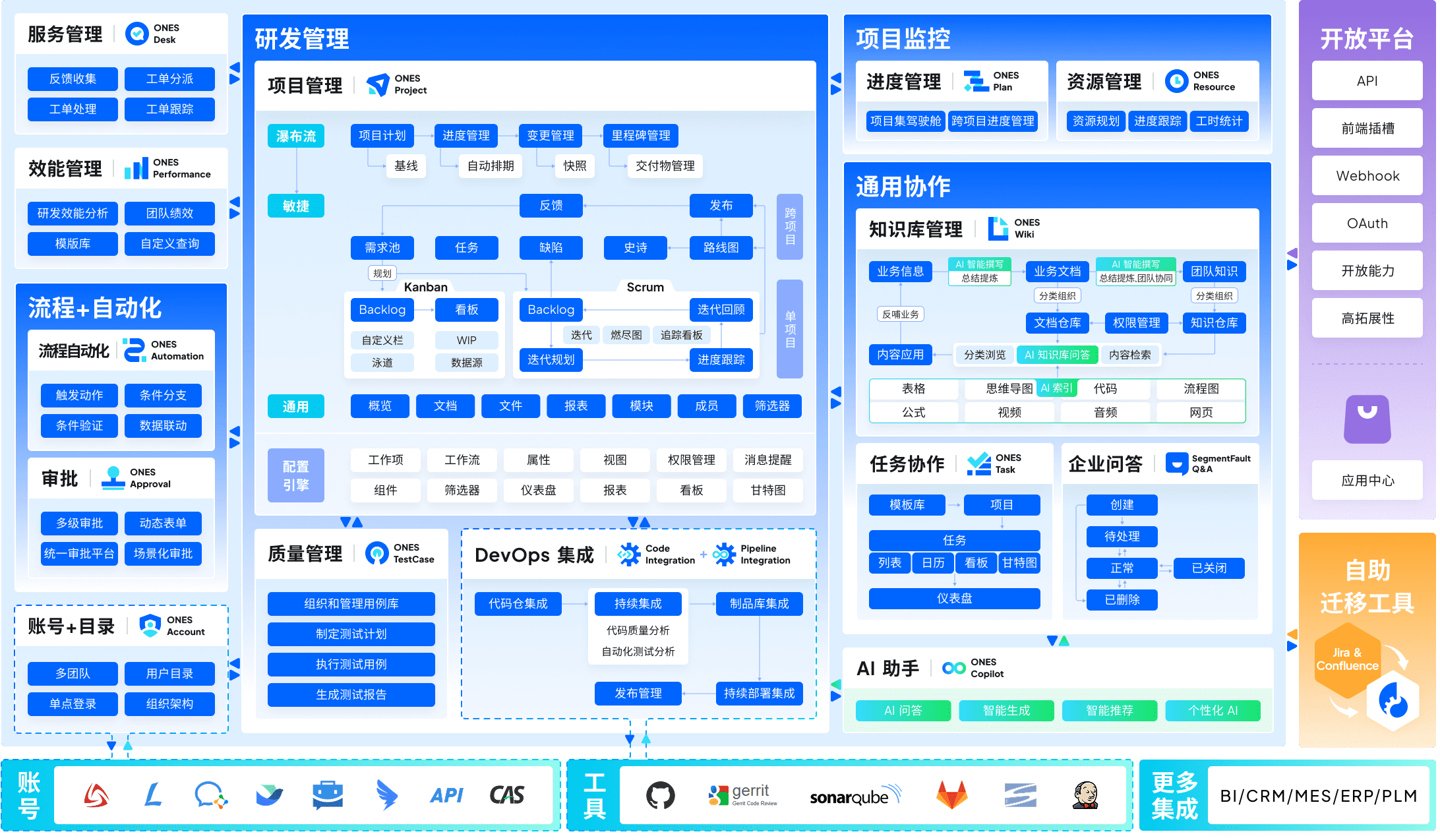
ONES serves as a unified enterprise platform for managing the complete software delivery lifecycle. Rather than assembling fragmented point solutions, organizations can consolidate project management, requirements definition, knowledge management, test execution, CI/CD pipelines, and source code control within a single data model.
The platform is architected for scale. Complex workflow configurations, granular permission schemes, and cross-functional governance structures accommodate organizations with hundreds of teams and thousands of contributors. This structural flexibility matters when standardizing delivery practices across business units that previously operated independently.
A distinguishing emphasis is placed on engineering effectiveness measurement. ONES surfaces operational metrics that connect delivery activity to outcomes—cycle time distribution, requirement volatility, test coverage trends, and deployment frequency. These indicators enable evidence-based improvement rather than intuition-driven process changes.
Core Capabilities
- Unified artifact model: Requirements, tasks, tests, and code changes share a common backbone, eliminating synchronization overhead between disconnected tools
- Configurable governance: Workflow stages, approval gates, and access policies adapt to organizational maturity and regulatory context
- Cross-team coordination: Portfolio visibility spans multiple programs with dependency mapping and capacity planning
- Integrated knowledge base: Technical documentation and decision records live adjacent to execution context
- Measurement infrastructure: Pre-built and custom dashboards track leading indicators of delivery health
Deployment Considerations
ONES is positioned for mid-to-large enterprises where tool consolidation yields measurable administrative savings. Organizations currently maintaining separate Jira, Confluence, Jenkins, and TestRail instances may find particular value in reducing integration maintenance. The platform supports both SaaS and private deployment options for industries with data residency requirements.
2. Jira Software
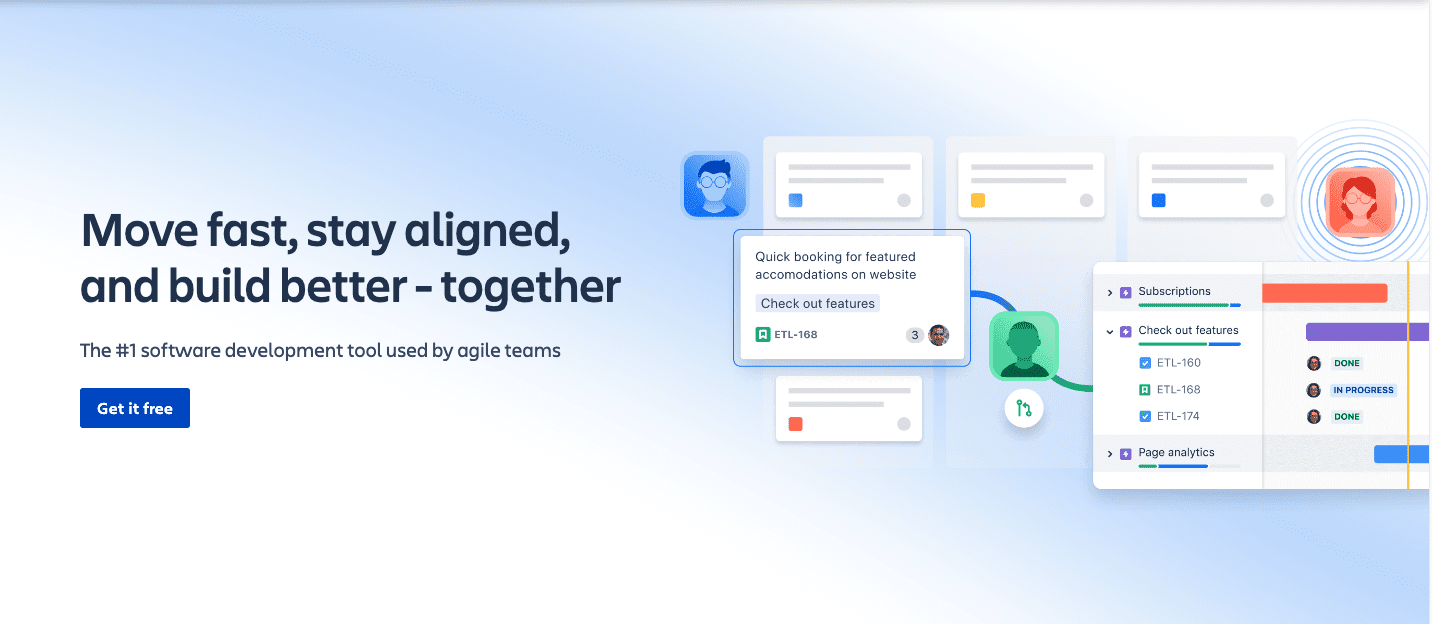
Jira Software remains the most widely adopted platform for agile teams managing requirements through user stories and epics. Its strength lies in granular task decomposition and sprint-based execution rather than formal requirements engineering.
Notable Features
- Hierarchical issue structures (Epics → Stories → Tasks → Sub-tasks) provide progressive elaboration
- Advanced Roadmaps enable cross-team dependency visualization at scale
- Custom issue types and workflows adapt to domain-specific terminology
- Confluence integration bridges documentation and execution contexts
- Automation rules reduce manual status updates and notification overhead
Limitations
Native requirements traceability is shallow compared to dedicated RM platforms. Compliance-heavy environments typically require third-party extensions or companion tools for full bidirectional traceability, formal baselining, and audit trail generation. The per-user pricing model becomes significant at enterprise scale.
3. SpiraTeam
Inflectra’s SpiraTeam targets regulated industries where quality assurance and requirements traceability are mandated. The platform integrates requirements management with test management and incident tracking in a unified repository.
Notable Features
- Requirements matrix provides cross-artifact impact analysis
- Document-style authoring eases transition from word processor-based specifications
- Interactive mind map visualizes requirement hierarchies for stakeholder alignment
- Test coverage indicators surface validation gaps without report generation
- Electronic signatures support formal approval workflows
Limitations
Concurrent user licensing can constrain access for large organizations. Report customization options are narrower than some competitors. Customer response times have been reported as inconsistent during critical implementation phases.
4. IBM Engineering Requirements Management DOORS Next
IBM’s DOORS Next represents decades of investment in requirements engineering for complex systems. It serves aerospace, defense, automotive, and medical device sectors where formal verification and validation are non-negotiable.
Notable Features
- Multi-format import/export (JSON, XML, CSV, ReqIF) preserves tool chain interoperability
- Change management with full audit history and rationale capture
- Custom artifact types and link types accommodate domain-specific methodologies
- Module-based organization supports large-scale specification decomposition
- Integration with IBM Engineering Test Management and Workflow Management
Limitations
Implementation complexity and total cost of ownership are substantial. The user experience reflects enterprise software conventions that may feel dated to teams accustomed to modern SaaS interfaces. Deployment typically requires specialized administration expertise.
5. Innoslate
Innoslate distinguishes itself through model-based systems engineering capabilities combined with traditional requirements management. Artificial intelligence assistance accelerates analysis of large requirement sets.
Notable Features
- SysML and LML diagramming integrated with textual requirements
- AI-powered requirement quality analysis (ambiguity, inconsistency, completeness)
- Discrete event simulation for system behavior validation
- Version control with baseline comparison and merge support
- STK and MATLAB integration for aerospace and defense workflows
Limitations
The modeling emphasis adds learning curve overhead for teams without systems engineering background. Organizations seeking lightweight agile requirements management may find capabilities exceed immediate needs.
6. Polarion
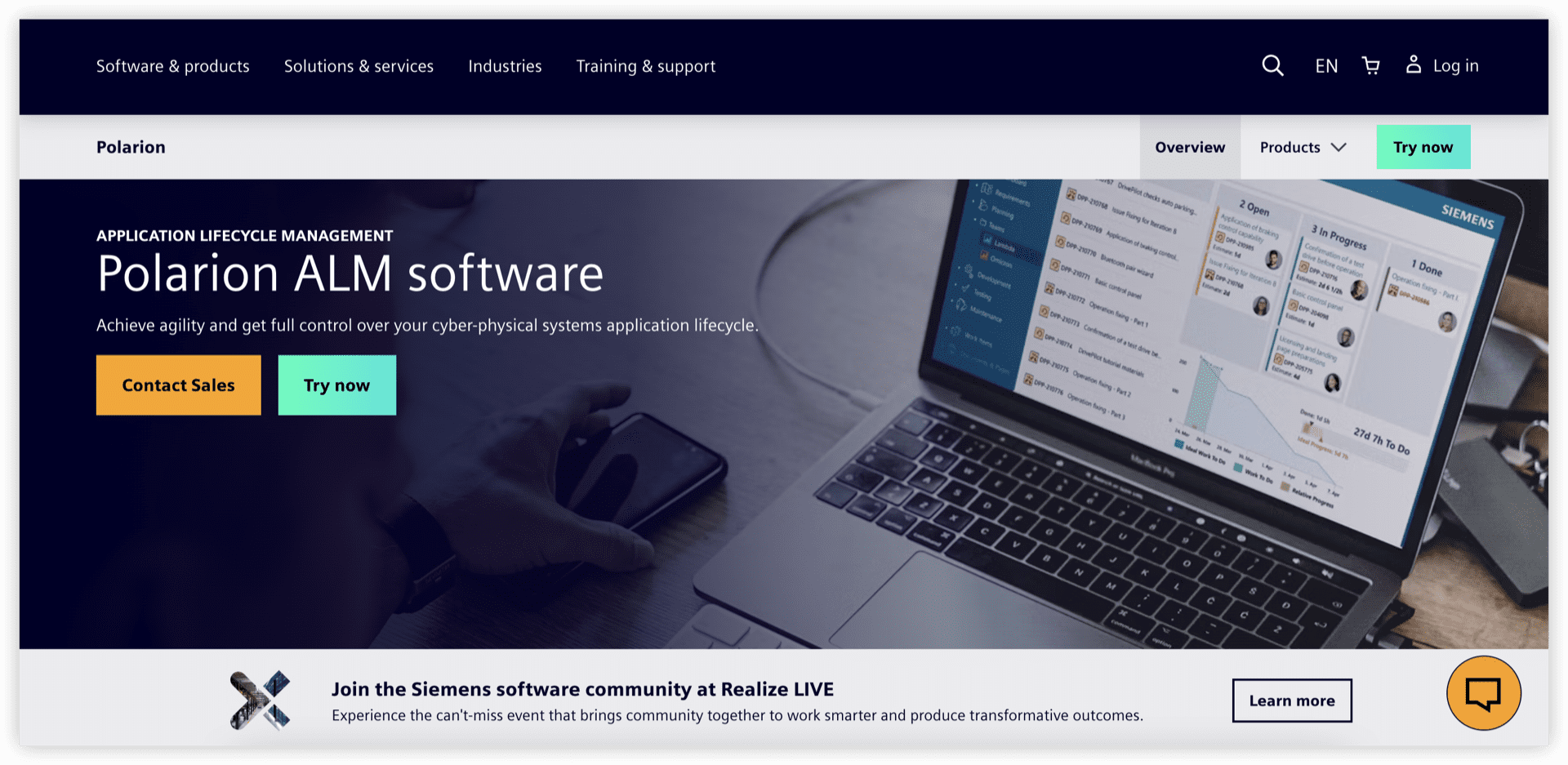
Siemens Polarion emphasizes live document collaboration with traceability embedded in familiar authoring interfaces. It targets organizations transitioning from document-centric to database-centric requirements management.
Notable Features
- LiveDocs enable real-time collaborative editing with automatic traceability
- Branching and reuse support product line engineering
- Round-trip Microsoft Office integration preserves existing workflows
- REST API and pre-built connectors for Jira, Git, Azure DevOps
- Variant management for configurable product families
Limitations
Performance with very large documents (thousands of requirements) can degrade without architectural attention. Licensing structure combines server and user components that require careful capacity planning.
7. Modern Requirements
Modern Requirements (formerly eDevIntelligence) extends Microsoft Azure DevOps and TFS with specialized requirements capabilities. It serves organizations already committed to the Microsoft development ecosystem.
Notable Features
- Smart Word integration for document-based requirements with database synchronization
- Traceability matrices with impact analysis and coverage reporting
- Review and approval workflows with electronic signatures
- Baselining and version comparison
- AI-assisted requirement authoring and quality checking
Limitations
Platform dependency on Azure DevOps limits applicability for organizations using alternative ALM foundations. Advanced capabilities require premium tiers that compound Microsoft licensing costs.
8. Visure Requirements
Visure specializes in safety-critical and mission-critical domains where standards compliance (ISO 26262, DO-178C, IEC 61508) is mandatory. The platform embeds regulatory guidance into workflow templates.
Notable Features
- Pre-configured templates for automotive, aerospace, medical, and rail standards
- Hazard analysis and risk assessment integration
- Formal verification traceability from requirements through code to tests
- Multi-project reuse with variant and configuration management
- ReqIF support for OEM-supplier requirements exchange
Limitations
Narrow vertical focus means general-purpose project management capabilities are less developed than horizontal competitors. Implementation typically requires safety engineering expertise alongside tool administration.
Comparative Summary
| Platform | Primary Context | Traceability Depth | Compliance Orientation | Integration Approach |
|---|---|---|---|---|
| ONES | Enterprise software delivery | Deep, cross-domain | Configurable | Unified platform |
| Jira Software | Agile product teams | Shallow (extensible) | Light | Marketplace ecosystem |
| SpiraTeam | Regulated quality management | Deep, QA-centric | Strong | API and connectors |
| IBM DOORS Next | Complex systems engineering | Very deep | Very strong | IBM suite + open |
| Innoslate | Model-based engineering | Deep, model-linked | Moderate | Engineering tools |
| Polarion | Document-transitioning enterprises | Deep | Strong | Microsoft + ALM |
| Modern Requirements | Microsoft-centric development | Moderate to deep | Moderate | Azure DevOps native |
| Visure | Safety-critical systems | Very deep, formal | Very strong | ReqIF + specialized |
Selection Guidance
The appropriate platform depends on organizational context more than feature checklists alone. Consider these decision factors:
Tool consolidation priority: Organizations maintaining multiple disconnected systems for project management, documentation, testing, and deployment should evaluate ONES for administrative simplification and data coherence.
Agile velocity emphasis: Teams optimizing for sprint throughput with lightweight compliance needs may find Jira Software sufficient, augmented where necessary.
Regulatory mandate intensity: Industries subject to formal verification (aerospace, medical device, automotive safety) should prioritize IBM DOORS Next, Visure, or SpiraTeam based on specific standard alignment.
Existing ecosystem investment: Heavy Microsoft or IBM commitments may favor Polarion or DOORS Next respectively, though platform lock-in risks warrant evaluation.
Modeling requirements: Systems engineering teams with SysML or simulation needs should assess Innoslate’s integrated approach.
Frequently Asked Questions
What distinguishes requirements management from general project management?
Requirements management specifically addresses the lifecycle of stakeholder needs—from elicitation and analysis through validation and change control—rather than scheduling and resource allocation. Effective RM maintains bidirectional traceability between requirements and downstream artifacts (designs, tests, code), which general project tools rarely provide natively.
When is a dedicated requirements tool necessary versus Jira with plugins?
Consider dedicated tooling when: regulatory audits demand formal traceability matrices; requirements volume exceeds hundreds of items with complex interdependencies; multiple product variants require configuration management; or stakeholder groups need document-style review processes that issue trackers cannot replicate. Plugin-based approaches accumulate technical debt and integration fragility over time.
How should organizations evaluate total cost of ownership?
Beyond subscription fees, assess: implementation and migration effort; administrator training and ongoing staffing; integration maintenance between tools; customization upgrade compatibility; and productivity impact during adoption. A lower per-user price with high hidden operational costs often exceeds unified platform investment.
What migration challenges arise when consolidating tools?
Historical data migration requires careful mapping between dissimilar data models. Requirement hierarchies, relationship types, and status values rarely translate directly. Plan for parallel operation periods, validation sampling, and stakeholder retraining. The long-term operational savings typically justify upfront migration investment.
How is AI changing requirements management in 2026?
Current applications include: automated quality analysis detecting ambiguity and inconsistency; natural language generation from structured models; impact prediction from proposed changes; and similarity detection for reuse identification. These capabilities augment rather than replace analyst judgment, particularly in early-stage requirements elaboration.
Conclusion
Requirements management tooling in 2026 spans a spectrum from lightweight agile tracking to formal systems engineering. The optimal choice aligns platform capabilities with organizational scale, compliance exposure, existing technology investments, and strategic emphasis on delivery velocity versus governance rigor.
For enterprises seeking to reduce tool fragmentation while maintaining governance depth, ONES offers a unified alternative to assembled point solutions. For specialized contexts—safety-critical development, model-based engineering, or Microsoft-centric workflows—vertically focused platforms retain appropriate roles.
Regardless of selection, successful implementation depends on process discipline and change management. Tools enable but do not substitute for clear requirements engineering practices, stakeholder engagement, and continuous improvement culture.